
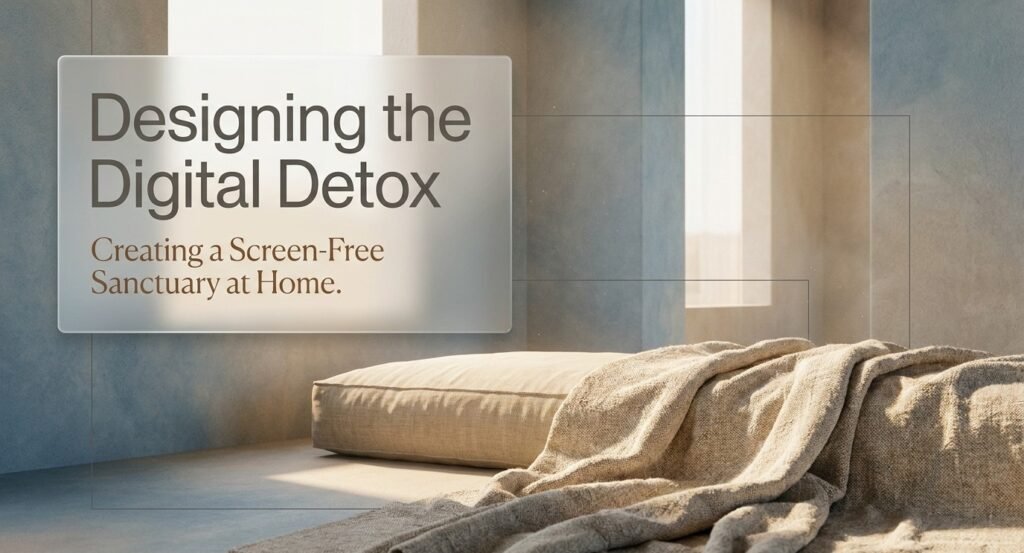
What is a no-screen relax zone?
The simple definition
A no-screen relax zone is a purposefully designed area in your home built around 1 goal: mental rest. Reading, journaling, breathwork, tea anything analogue, nothing digital.
Interior design psychologists describe these as “mood nooks” spaces engineered to trigger calm the moment you enter them. Every material, light source, and seat choice does psychological work.
How it differs from regular home decor
Standard interior design focuses on how a space looks. A wellness corner focuses on how a space makes you feel. Colour psychology, acoustic softness, material texture, light temperature all of it is intentional here.
Why every home needs one in 2026
The digital overload problem
The average urban professional logs 11+ hours of screen time daily, counting work and leisure combined. Most homes aren’t built with recovery in mind that’s an environmental design gap, not a personal failing.
Designers across India, the US, and Europe are all reporting the same client request: I need somewhere to actually switch off.
Analog living is making a real comeback
Intentional analog living spaces rooms without screens, without programming are one of the strongest interior design shifts of 2026. The reference point clients keep citing is a boutique hotel suite: comfort and privacy that physically slow you down.
Homeowners describe these as “incredibly intentional” rooms with a clear emotional purpose reflection, creativity, or simply rest.
How to find the right spot at home
You don’t need a separate room
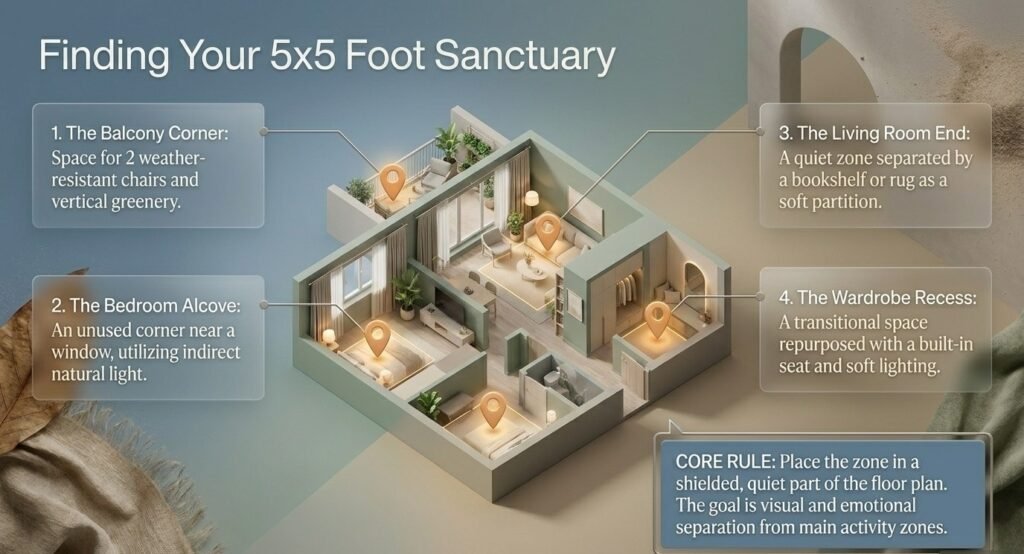
A 5×5 foot corner works. Good candidates in most Indian apartments:
- An unused bedroom corner near a window
- A balcony with space for 2 chairs
- A quiet living room end, separated by a bookshelf or rug
- A landing or transitional area that currently sits empty
Use natural light as your guide
Place your digital detox space in the more shielded, quieter part of your floor plan away from the main activity zones. Soft, indirect natural light works better here than harsh direct sun.
The goal is visual and emotional separation from the rest of the house.
Calming colour choices for a wellness corner
Colours that work with your nervous system
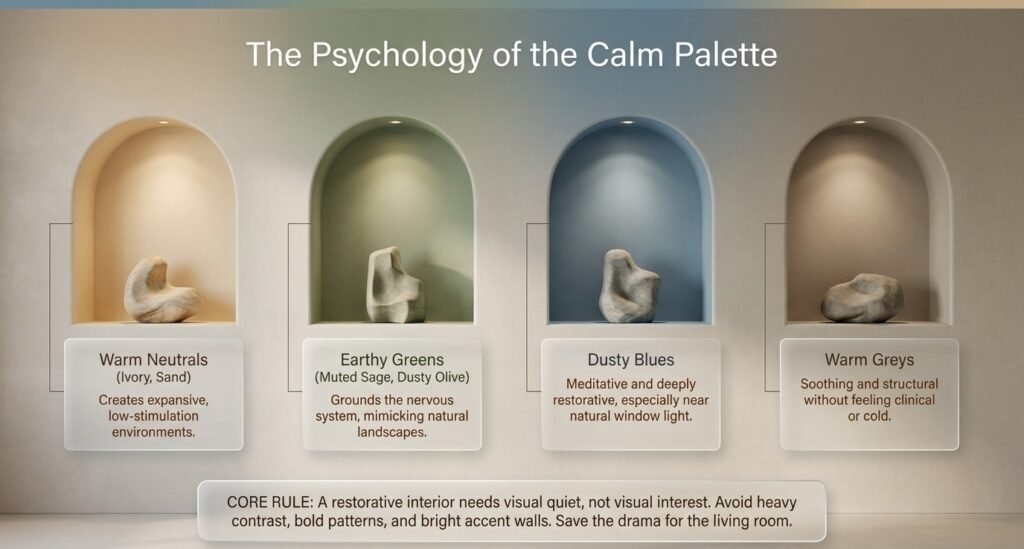
Colour psychology directly affects cortisol levels. For a stress-free living space, avoid anything visually stimulating. The palettes that consistently work in calming home decor:
- Warm neutrals — ivory, beige, sand, warm white
- Earthy greens — muted sage, dusty olive
- Warm greys — soothing without being cold
- Dusty blues — meditative, especially near natural light
What to avoid
Heavy contrast, bold patterns, and bright accent walls belong in the rest of the house. A restorative interior needs visual quiet not visual interest. Save the drama for the living room feature wall.
Seating options that encourage genuine rest
Comfort over productivity
Your seat should feel like the opposite of your work chair. Options that work well in a cozy reading nook or meditation corner:
- Low-height floor cushions with lumbar support
- A boucle lounge chair angled toward a window
- A window bench with thick upholstered padding
- A daybed in a corner with a linen throw
- A custom reading nook built into a recessed wall
Why fabric choice matters more than you think
Linen, cotton, and boucle are tactile in a way synthetic materials simply aren’t. That texture registers in the nervous system it signals “this is different from my desk chair.” Go natural wherever possible in a mindful interior design setup.
Lighting: the detail most people get wrong
Skip the overhead ceiling light
Overhead white lights are designed for task performance. They signal “work mode” to your brain which is the exact opposite of what a no-screen relax zone needs. They’ll kill the mood instantly.
Layer warm light sources instead
- A warm LED floor lamp 2700K to 3000K colour temperature
- Indirect cove lighting behind shelves or along the ceiling edge
- A Himalayan salt lamp as a low-key ambient accent
- Candle-style fixtures for evening use
- A soft reading lamp placed at eye level, not above
Warm-spectrum light physically tells your body to wind down. This is the single most impactful (and budget-friendly) change you can make to a relaxation corner.
Biophilic design: bring the outside in
Why natural materials reduce stress
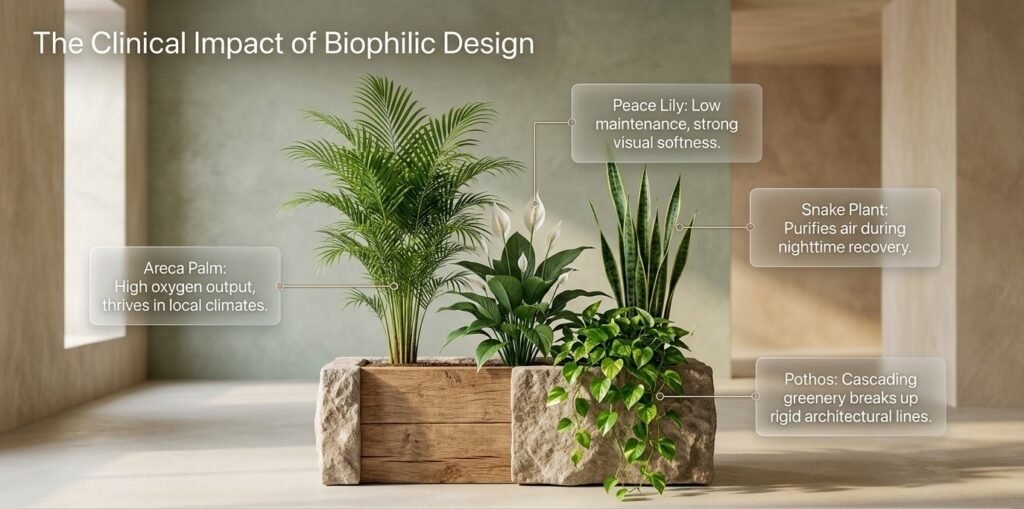
Biophilic design the deliberate use of natural materials and greenery reduces cortisol measurably. It’s one of the few interior principles with genuine clinical backing, and it’s central to any well-designed wellness corner.
What to add to your space
- Indoor plants: snake plant, pothos, peace lily, areca palm (all low maintenance)
- Wooden textures in furniture or open shelving
- Cane or rattan accent pieces
- Stone or clay decorative objects
- Jute or wool rugs underfoot
Why it works especially well in Indian homes
Plants like areca palm and peace lily thrive in Pune and Hyderabad’s climate with minimal effort. And natural materials wood, cane, stone already have a strong visual language in Indian interior design. They feel familiar and warm rather than trend-driven.
The clutter problem
Clutter is visual noise. And visual noise is mental noise. A screen-free sanctuary filled with objects, storage units, and decorative excess defeats its own purpose.
What a well-edited relaxation corner actually contains
- 1 comfortable seating piece
- 1 small side table or surface for a drink or book
- 1 to 2 warm light sources
- 2 to 3 plants maximum
- A rug that anchors the zone visually
- 1 piece of art or a small shelf optional
The restraint is the design. Every object earns its place by making the space feel calmer, not just fuller.
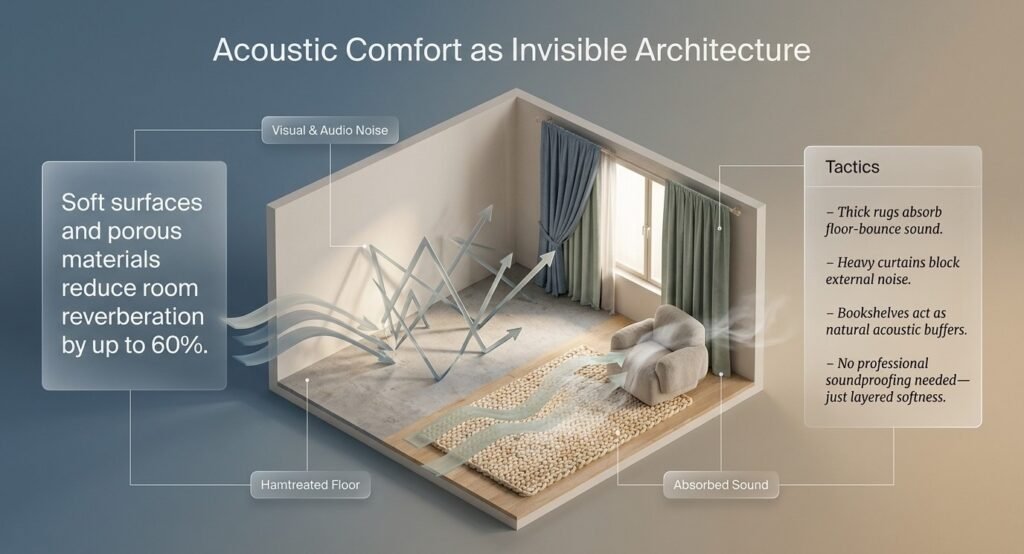
Acoustic comfort: the invisible layer
Sound is invisible clutter
A beautiful wellness corner fails if you can hear the TV from the next room or traffic outside. Acoustic comfort is non-negotiable in a proper digital detox space.
Simple ways to soften sound
- A thick rug absorbs floor-bounce sound
- Heavy curtains or drapes block external noise and light
- A bookshelf on the shared wall acts as a natural acoustic buffer
- Soft upholstery layered throughout the space
Soft surfaces and porous materials can reduce room reverberation by up to 60%. No professional soundproofing needed just softness, layered intentionally.
Small apartment ideas for Pune and Hyderabad homes
Compact spaces, full results
Most urban apartments in Pune and Hyderabad aren’t large. A dedicated room often isn’t possible. Some of the best screen-free sanctuaries are tight, focused corners and they work better for it.
What actually works in smaller homes
- Balcony corner with 2 weather-resistant cushioned chairs and a vertical plant display
- Bedroom window alcove with a built-in seat and storage underneath
- A living room corner separated by a tall bookshelf as a soft partition
- A wardrobe recess repurposed into a cozy reading nook with soft lighting
Starting with feeling, not aesthetics
Most designers pick a sofa and a plant and call it a wellness corner. Xclusive Interiors a luxury interior design studio in Pune and Hyderabad approaches it differently.
The process starts with how the client wants to feel in the space. Then it works backwards to spatial flow, lighting psychology, material texture, and acoustic comfort. That’s real mindful interior design.
What that looks like in practice
Projects range from compact balcony wellness corners in Pune apartments to full dedicated no-screen relax zones in Hyderabad villas. Each one is designed to function as a genuine daily recovery space one you’ll actually use, every day.
With over a decade of residential interior design experience across Maharashtra and Telangana, Xclusive Interiors brings the creative vision and technical detail that makes emotional zoning actually work not just look good in photos.
Daily habits that make your relax zone more effective
The design sets the stage habits lock it in
- Enter without your phone. Leave it in another room, every time.
- Keep a book, journal, or sketchpad there permanently.
- Make 1 warm drink before sitting down the ritual matters as much as the space.
- Use it for 20 to 30 minutes with no agenda.
- Guard its purpose. Never use the zone for work, scrolling, or anything screen-based.
The more consistently you use it, the faster your brain associates it with recovery. Eventually, entering feels like exhaling.
Regular corner vs. designed relax zone: quick comparison
| Element | Untreated corner | Designed wellness corner |
|---|---|---|
| Lighting | Overhead white light | Layered warm ambient sources |
| Seating | Spare chair | Ergonomic lounge, natural fabric |
| Sound | Unaddressed | Rugs, drapes, soft surfaces |
| Colour | Default wall paint | Psychology-led calm palette |
| Materials | Mixed / synthetic | Wood, cane, linen, stone |
| Plants | None | 2 to 3 species, intentionally placed |
| Purpose | Undefined | Screen-free recovery, daily use |
Great article! I really enjoyed reading your insights. The information is clear, practical, and easy to understand. Thanks for sharing such valuable content. For professional interior and construction solutions,