Why City Apartments Have a Noise Problem
Apartment buildings transmit sound in 2 main ways: airborne noise (voices, traffic, TV) and impact noise (footsteps, furniture dragging). Most standard construction handles neither particularly well.
Concrete walls reflect sound rather than absorbing it. Open-plan layouts create echo chambers. And glass windows the thinner the pane, the worse the sound insulation.
Add to that the compact nature of modern apartments in cities like Pune, and you get spaces where sound travels fast and stays long.
The 4 most common noise complaints we hear
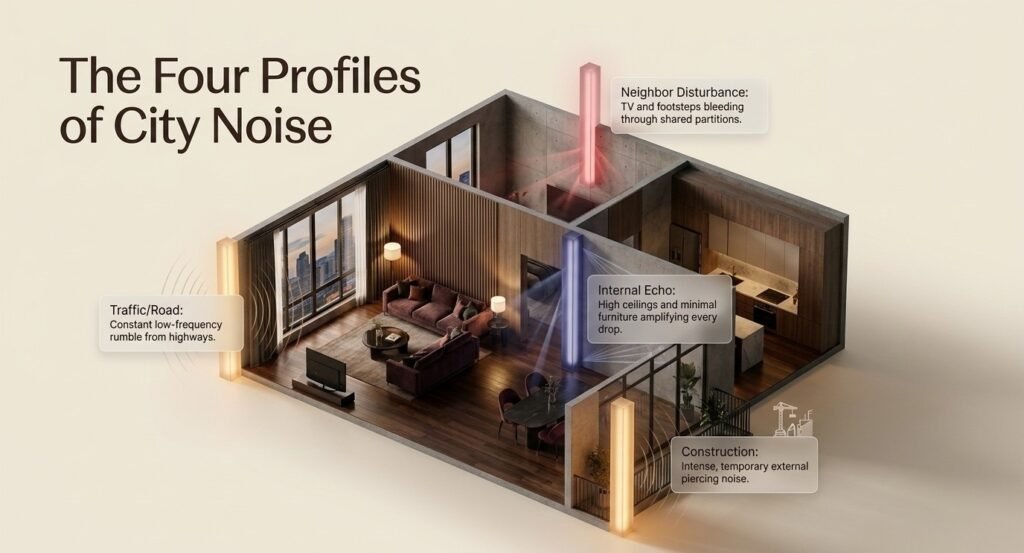
- Traffic and road noise — constant low-frequency rumble from nearby highways or main roads
- Neighbor disturbance — footsteps and TV through shared ceilings and walls
- Internal echo — high ceilings and minimal furniture in new apartments amplify every sound
- Construction noise — intense but temporary; acoustic curtains and panels help during these phases
Acoustic Wall Panels: The Most Effective Fix
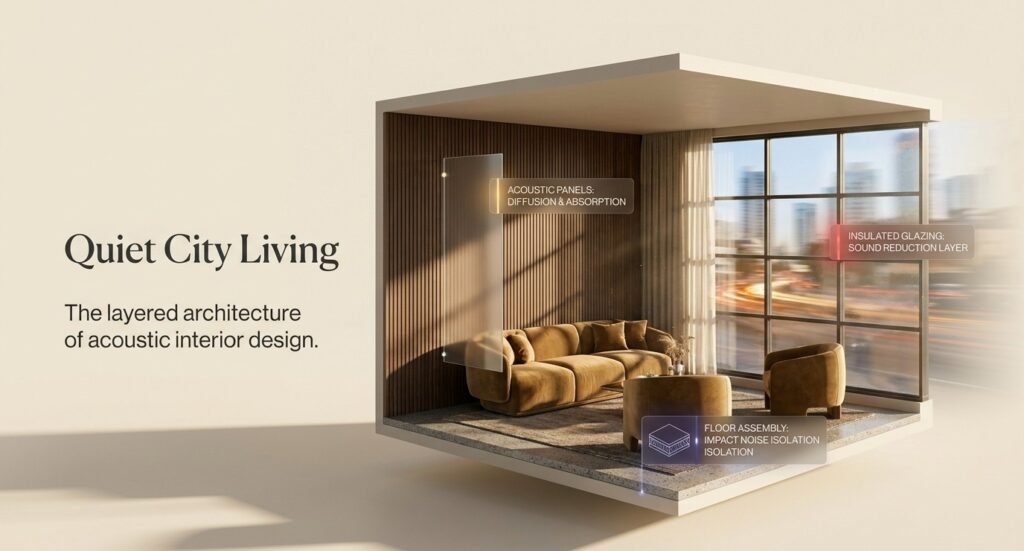
Acoustic wall panels absorb sound instead of bouncing it back. They work because the surface material (fabric, wood, foam composite) converts sound energy into small amounts of heat which dissipates instead of continuing to travel through your home.
The practical effect: rooms feel quieter and more intimate. Echo reduces noticeably. External noise feels further away.
Where to install them
- Behind the bed headboard wall
- TV feature wall (reduces echo and improves sound quality)
- Shared wall with neighbors
- Home office especially on the wall facing your desk
Material options worth considering
- Fabric-wrapped panels — softest acoustic performance, wide color range
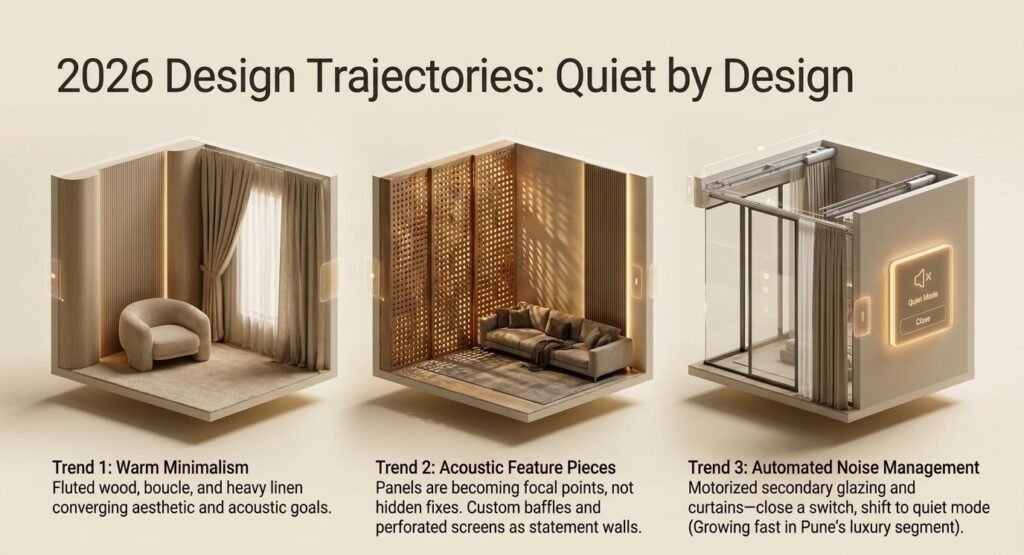
- Wooden fluted panels — popular in 2025–26, good mid-frequency absorption, strong visual
- Cork panels — natural look, solid acoustic properties, sustainable
- Perforated wood panels — best for rooms that need both aesthetics and acoustic control
Windows: The Weakest Link in Most Apartments
A single-pane glass window does almost nothing to stop external noise. The glass vibrates with sound waves and transmits them straight through.
Double-glazed windows add an air gap between 2 glass panes. That gap disrupts the sound wave and significantly reduces transmission especially for traffic and construction noise in the 500–2000 Hz range.
For apartments near Pune’s ring road or any major arterial road, double glazing is the single highest-impact investment you can make in acoustic comfort.
If you can’t change the windows
Secondary glazing a second layer of glass installed on the interior side of existing windows delivers similar results at lower cost. It’s also reversible, which matters for rented apartment
Curtains That Actually Do Something
Standard curtains are decorative. Noise-reducing curtains are heavier, denser, and usually layered. The fabric mass absorbs some airborne sound before it reflects off your walls.
For the best result: floor-to-ceiling, wall-to-wall installation. Curtains that stop at the windowsill miss most of the surface area where sound enters.
Fabrics that work
- Velvet (heaviest, best acoustic mass)
- Triple-weave blackout fabric
- Layered linen with thermal backing
Combine these with acoustic wall panels and you’re covering 2 of the main sound entry and reflection points in the room simultaneously.
Soft Furnishings: Simple and Underestimated
Hard surfaces marble floors, glass, bare walls reflect sound. Soft surfaces absorb it. This basic physics is why a furnished room always sounds quieter than an empty one.
| Material / Furnishing | What it reduces | Best placement |
|---|---|---|
| Large area rugs | Floor echo, impact noise | Living room, bedroom |
| Upholstered sofa | Mid-frequency echo | Living room |
| Fabric headboard | Bedroom wall reflection | Bedroom |
| Cushions and throws | High-frequency flutter echo | Seating areas |
| Bookshelves (filled) | Airborne noise, wall transmission | Shared walls |
| Upholstered dining chairs | Dining room echo | Dining area |
None of these feel like “acoustic solutions” they just look like good interior design. Which is exactly the point.
Building a Quiet Reading Corner
A quiet reading corner works because it concentrates acoustic treatment into a small, contained area. You’re creating a pocket of calm rather than trying to treat an entire room.
ima
What goes into a well-designed quiet corner
- Upholstered armchair (high back helps block ambient noise)
- Acoustic panel or fabric wall treatment on 1-2 sides
- Heavy curtain on the nearest window
- Rug underfoot
- Warm, low-level lighting (reduces sensory stimulation overall)
- Indoor plants nearby greenery helps absorb some high-frequency sound
At Xclusive Interiors, these corners increasingly double as work-from-home focus zones. Same acoustic logic, slightly different furniture brief.
Smart Furniture Layout for Noise Control
Furniture placement is free. It costs nothing and takes an afternoon. And it works.
The core principle
Put mass between you and the noise source. Large wardrobes, floor-to-ceiling bookshelves, and storage units placed against shared walls act as physical barriers to sound transmission.
Practical layout moves
- Pull the bed away from the wall shared with neighbors even 10–15 cm helps
- Position the sofa with its back to the loudest wall
- Place the TV entertainment unit against an external wall, away from the bedroom
- Use open bookshelves on shared walls and fill them books are surprisingly good sound absorbers
Acoustic Ceilings: Often Ignored, Often the Problem
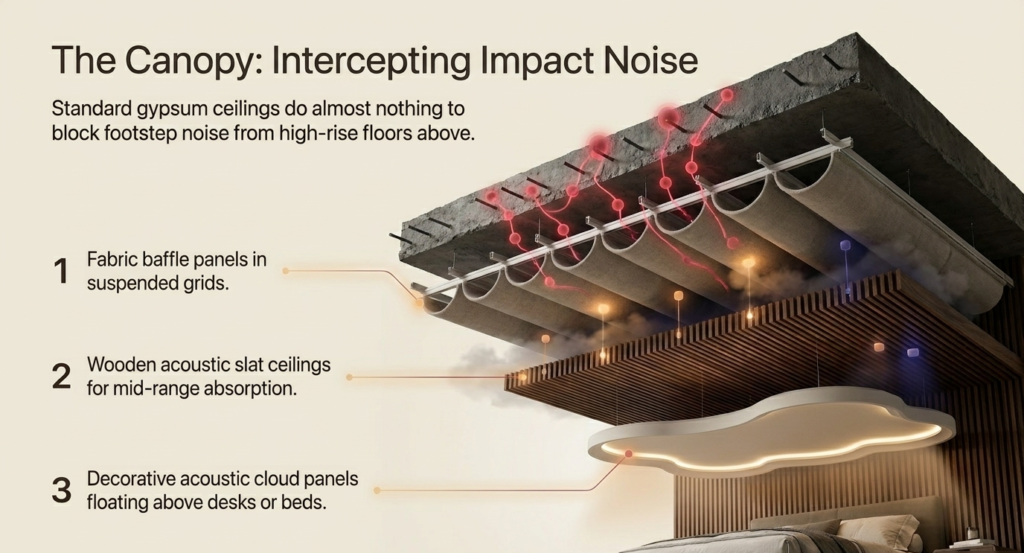
In high-rise apartments, footstep impact noise from the floor above is one of the hardest problems to solve. Standard gypsum ceilings do almost nothing to block it.
Acoustic ceiling panels whether fabric baffles, wooden slat systems, or mineral wool-backed gypsum reduce both impact transmission and internal echo. They’re particularly worth specifying in bedrooms and home offices.
Current ceiling design options
- Wooden acoustic slat ceilings (popular aesthetic in 2025–26, good mid-range absorption)
- Fabric baffle panels in suspended ceiling designs
- Perforated gypsum with acoustic backing
- Decorative acoustic cloud panels island-style, floating above a desk or bed
Cost Guide: Soundproofing an Apartment in India (2026)
| Solution | Approximate Cost | Best suited for |
|---|---|---|
| Acoustic wall panels | ₹150 – ₹600 per sq.ft | Bedrooms, offices, shared walls |
| Double-glazed windows | ₹700 – ₹1,800 per sq.ft | Road-facing apartments |
| Secondary glazing | ₹400 – ₹900 per sq.ft | Rentals, budget-conscious upgrades |
| Noise-reducing curtains | ₹4,000 – ₹25,000 per set | Bedrooms, living rooms |
| Acoustic ceiling panels | ₹180 – ₹700 per sq.ft | High-rise apartments, bedrooms |
| Door sealing (sweeps + seals) | ₹1,000 – ₹5,000 per door | All apartments |
| Area rugs (wool, thick pile) | ₹8,000 – ₹60,000+ | Hard-floor apartments |
Costs vary by apartment size, material quality, and customization. One thing we consistently see: acoustic planning built into the design phase is cheaper than retrofitting it later. A lot cheaper.