
How to Design a Luxury Home: A Practical Guide
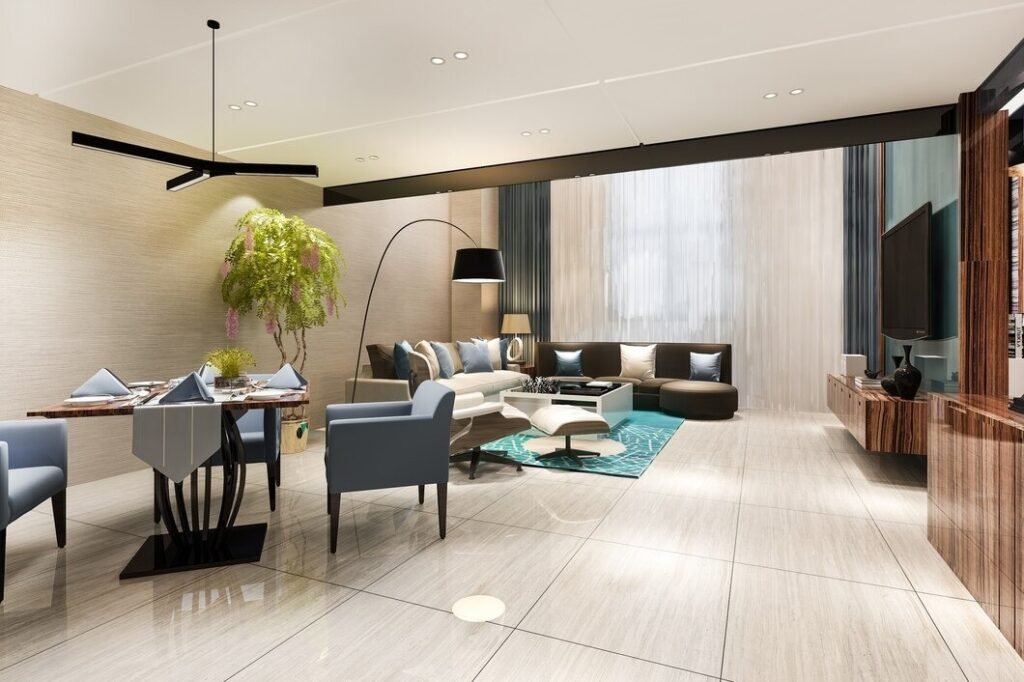
A luxury home starts with good planning.
Before choosing marble, chandeliers or expensive furniture, you need to understand how the home will actually be used. Where will people sit? How will they move between rooms? What needs to be stored? Which areas deserve more of the budget?
These decisions matter more than buying the most expensive finish available.
This becomes especially clear in larger Pune apartments, villas and bungalows. More space gives you more possibilities, but poor proportions can make even a large home feel uncomfortable.
A well-designed luxury home should look beautiful, work well every day and still feel personal to the family living in it.
Here’s how to plan one from the beginning.
Table of Contents
What makes a home feel luxurious?
Luxury is usually the result of several small decisions working together.
Think about a living room with expensive marble but undersized furniture. The materials may cost a lot, but the room can still feel empty and poorly balanced.
Now put correctly sized furniture in the same room, create comfortable walking space, use layered lighting and keep the finishes controlled.
The room feels completely different.
When planning a luxury home, pay attention to:
- Proportion
- Space planning
- Material quality
- Lighting
- Furniture scale
- Storage
- Craftsmanship
- Comfort
- Personal details
The goal is to make these decisions work together.
If you’re looking for professional help with the complete process, you can explore our interior designers in Pune page to understand our residential design and execution services.
Start with how your family lives
Before creating a design style, understand the people using the home.
Do you host large dinners?
Do your children spend most of their time in the living room?
Do you work from home?
Do you need a quiet study?
Do you collect books, artwork or antiques?
Do you cook frequently?
Do you need a separate utility area?
These questions change the design.
For example, a family that entertains regularly may need better movement between the kitchen, dining area and living room.
Someone who works from home may need acoustic privacy, proper task lighting and dedicated storage.
A luxury home should respond to these habits instead of forcing the family to adjust to the design.
Plan the layout before selecting materials
This is one of the most important stages of the project.
Don’t begin with a marble sample or wallpaper catalogue.
Begin with the floor plan.
Place the major furniture pieces and check:
- Walking paths
- Door openings
- Window positions
- Sofa dimensions
- Dining chair clearance
- TV viewing distance
- Storage access
- Kitchen movement
- Bedroom circulation
A sofa that looks perfect in a showroom may be too large for your living room.
A kitchen island may look impressive but become inconvenient if there’s not enough space around it.
These problems are much easier to fix on a drawing than after installation.
For a deeper look at furniture placement and movement, see our interior layout guide.
Create one design language across the home
Every room doesn’t have to look the same.
A living room can feel formal, while a bedroom can be softer. A study can have darker finishes without making the rest of the house feel disconnected.
What should connect the rooms is the overall design language.
You might repeat:
- One or two wood tones
- A metal finish
- A family of neutral colours
- Similar door details
- Related flooring
- Consistent hardware
- Similar lighting finishes
For example, warm walnut can appear in the living room furniture and later in bedroom cabinetry without being used on every possible surface.
The result feels connected without becoming repetitive.
Choose materials according to their use
Every material has a different job.
Marble creates a strong visual surface.
Wood adds warmth.
Glass keeps spaces visually lighter.
Metal introduces contrast.
Stone can give a wall more texture and weight.
Before choosing a finish, ask how that surface will be used.
A delicate finish behind a sofa may be perfectly practical.
The same finish in a high-traffic passage may require more maintenance than you’re willing to handle.
This is where good design decisions save money. You aren’t simply buying materials. You’re choosing where each material makes sense.
Use premium materials selectively
A common mistake is putting too many expensive finishes into one room.
Imagine a living room with heavily veined marble, patterned wallpaper, elaborate wall panelling, glossy cabinetry, ornate furniture and a large chandelier.
Each item may look beautiful by itself.
Together, they can compete for attention.
A dramatic stone wall may need simpler furniture.
A detailed ceiling may work better with quieter walls.
A statement chandelier can carry the dining room without requiring another major feature directly underneath it.
A luxury home needs visual balance.
Plan lighting with the furniture
Lighting should be discussed while the layout is being developed.
A luxury home usually needs several layers of light.
General lighting
This handles everyday movement and basic illumination.
Task lighting
This supports activities such as reading, cooking, dressing and working.
Accent lighting
This draws attention to artwork, architectural details, niches or decorative objects.
The position of each light matters.
A spotlight placed slightly away from the intended artwork position can create glare or uneven illumination.
A pendant that’s centred incorrectly over a dining table can make the entire arrangement feel off.
Plan the furniture and lighting together.
Think about natural light too
Artificial lighting is only one part of the picture.
Look at where sunlight enters the home throughout the day.
A room with strong morning light may need a different window treatment from a room receiving intense afternoon sun.
Natural light also changes how colours and materials appear.
A beige wall can look warm in one direction and noticeably cooler in another.
Before finalising paint, wallpaper, upholstery or stone, look at samples in the actual room and at different times of day.
Get furniture proportions right
Large rooms don’t automatically need huge furniture.
The furniture should relate to the room dimensions and to one another.
A sofa that’s too small can make a large living room feel empty.
A dining table that’s too large can make movement around it uncomfortable.
A bed that’s too large for the bedroom can reduce useful circulation and storage access.
Before buying furniture, measure the room and create a scaled layout.
This is particularly important for custom furniture because once it’s made, changing the dimensions can become expensive.
Build storage into the design
Storage is often overlooked when people think about luxury.
It shouldn’t be.
A home may look perfect when it is newly finished. Six months later, bags, appliances, books, toys and everyday objects can take over.
Plan storage based on what you actually own.
Think about:
- Shoes
- Luggage
- Linen
- Appliances
- Crockery
- Books
- Cleaning equipment
- Electronics
- Children’s belongings
- Seasonal items
In bedrooms, wardrobe interiors deserve as much thought as the outside finish.
In kitchens, storage should follow the way you cook.
In living areas, concealed storage can keep everyday objects under control.
Good storage protects the design you’ve already paid for.
Make the kitchen practical first
A luxury kitchen still has to work at breakfast time.
Plan the relationship between the refrigerator, sink, hob and preparation areas.
Then consider pantry storage, small appliances, tall units and the connection to the utility area.
Think about movement too.
Where do groceries enter?
Where do used dishes go?
Can two people work in the kitchen without constantly crossing paths?
If domestic help uses the kitchen, include their movement in the planning.
The kitchen should look good when it’s clean and remain practical when it’s busy.
Keep bedrooms calmer
The bedroom has a different purpose from the living room.
This is where softer materials, controlled lighting and comfortable furniture proportions usually work better.
Plan:
- Bed position
- Bedside tables
- Reading lights
- Wardrobe access
- Dressing space
- Curtains
- Charging points
- Storage
You don’t need a dramatic feature on every wall.
A good bed, comfortable lighting, quality fabrics and well-planned storage can do much more for the room.
Make the home personal
A luxury home should reflect the people living in it.
That could be a collection of books, photographs, artwork, travel pieces, family furniture or Indian craft.
Don’t feel pressure to display everything.
Choose pieces that have meaning and give them suitable positions.
If you have paintings, sculptures or antiques, bring them into the design discussion early. Their size and placement can affect furniture, wall finishes and lighting.
Our guide on using fine art and antiques in luxury interiors covers those decisions in more detail.
Use Indian elements without making the home feel themed
Traditional Indian materials and motifs can work beautifully with contemporary interiors.
A carved wooden element, brass detail, Indian artwork or handcrafted piece can add character without requiring the entire room to follow a traditional style.
The key is proportion.
One carefully selected piece can be enough.
If you’re interested in combining contemporary interiors with Indian references, read our guide to Indian motifs in interior design.
Plan apartments and villas differently
A luxury apartment and a luxury villa don’t present the same design problems.
Apartments often have fixed structural elements, window positions, service shafts and society restrictions.
Villas may give you more freedom but bring larger rooms, multiple floors, outdoor connections and sometimes double-height areas.
The design should respond to the property rather than follow a fixed template.
For apartment-specific considerations, see our luxury apartment interior design ideas.
Decide where your budget deserves attention
You don’t have to spend the maximum amount on every part of the home.
Put more of the budget into things that are difficult to change or used every day.
These may include:
- Space planning
- Kitchen hardware
- Wardrobe mechanisms
- Lighting
- Flooring
- Major stonework
- Door hardware
- Custom furniture
Decorative accessories can be changed later.
A well-planned ₹10,000 decision can sometimes matter more than a ₹1 lakh decorative purchase.
Don’t forget the ceiling
The ceiling affects much more than appearance.
It needs to accommodate lighting, air-conditioning, fans, electrical requirements and sometimes curtain tracks.
A large false ceiling can reduce the sense of height in a room with limited clearance.
A double-height room needs a completely different approach.
Keep the ceiling proportional to the architecture instead of adding layers simply because the room allows them.
Plan technology before the walls close
Smart-home systems are much easier to integrate during the planning stage.
Think about:
- Lighting control
- Automated curtains
- Air conditioning
- Security
- Entertainment
- Wi-Fi
- Audio
- Charging points
The visible technology should stay quiet.
The best systems are the ones that make daily routines easier without taking over the appearance of the room.
Pay attention to execution details
A good design can still look poor if the execution isn’t controlled.
Check details such as:
- Door alignment
- Cabinet gaps
- Handle positions
- Switch placement
- Lighting alignment
- Curtain pockets
- Skirting
- Wall junctions
- Stone joints
These become especially noticeable in a premium home.
For more detail on this part of the process, see our guide to premium detailing in luxury interior design in Pune.
Common mistakes in luxury home design
Buying furniture too early
Furniture dimensions can force compromises in the layout.
Using too many statement finishes
When everything demands attention, nothing gets enough attention.
Ignoring storage
Open shelving can’t replace practical everyday storage.
Treating lighting as decoration
A beautiful chandelier doesn’t replace task and accent lighting.
Copying a showroom
A showroom demonstrates a look. Your home needs to support your routines.
Choosing trends without considering longevity
A home should still feel comfortable when the current trend disappears from social media.
A practical luxury home checklist
Before execution begins, make sure you have reviewed:
- Floor plan
- Furniture layout
- Storage requirements
- Flooring
- Wall finishes
- Kitchen layout
- Wardrobes
- Lighting
- Electrical points
- Curtains
- Ceiling
- Air-conditioning
- Smart-home requirements
- Artwork locations
- Hardware
- Custom furniture
Then review the entire home as one connected space.
A material that looks good in the living room may feel disconnected from the hallway.
A light fixture that looks right on paper may sit awkwardly in the actual room.
These relationships are much easier to fix before execution.
The final test
Take away the price tags.
Would you still know who lives in the home?
Maybe the living room is planned around a painting collected years ago.
Maybe the dining area is larger because the family hosts every weekend.
Maybe the study is built around a large book collection.
Maybe the kitchen has extra storage because cooking is an important part of family life.
These choices give a luxury home its character.
At Xclusive Interiors, the design process brings together planning, materials, furniture, lighting, storage and execution instead of treating each decision separately.
If you’re planning a luxury home in Pune, start with how you want to live in the space. The finishes come after that.
FAQs
What makes a home look luxurious?
Good proportions, thoughtful space planning, quality materials, suitable lighting, comfortable furniture and carefully selected details usually have a greater effect than simply using expensive finishes everywhere.
How do I start designing a luxury home?
Start with your floor plan and lifestyle requirements. Decide how each room will be used, then plan furniture, storage, materials, lighting and decorative elements around those requirements.
Which materials work well in luxury interiors?
Natural stone, marble, wood, metal, glass, quality veneers and carefully selected decorative finishes can all work well. The right material depends on its location, use, maintenance and the overall design.
How important is lighting in a luxury home?
Lighting affects how the entire interior is experienced. General, task and accent lighting should be planned together so the home works for everyday activities as well as entertaining.
How can I make a large home feel warm?
Use furniture that’s correctly scaled, introduce warm materials and textiles, layer the lighting and include personal objects. Too much empty space and too little furniture can make a large room feel cold.
Should every room have the same design?
No. Each room can have its own character. Repeating selected materials, colours, hardware or finishes can connect the rooms without making them identical.
How much does luxury interior design cost?
There is no single price for every luxury home. Cost depends on property size, customisation, materials, furniture, technology and execution scope. Budget should be allocated according to the elements that matter most to your home.
When should I hire an interior designer?
Ideally, before major layout, electrical and material decisions are finalised. Early planning gives the design team more control over furniture, storage, lighting, finishes and execution.