
Luxury apartment interiors should look refined, but they also need to work around real Indian routines. A kitchen may handle heavy cooking, the living room may host guests every weekend, and storage can disappear faster than expected.
The best apartment design starts with those everyday details. Then finishes, furniture, lighting and décor can be chosen around them.
For Xclusive Interiors, this means looking at how a family actually uses each room before deciding how the room should look.
What makes luxury apartment interiors work for Indian homes?
Luxury comes from good decisions rather than filling every corner with expensive materials.
A well-designed apartment usually gets 5 things right:
- Storage is planned before furniture is ordered.
- Kitchen finishes can handle regular cooking.
- Lighting works for both daily use and entertaining.
- Furniture leaves enough walking space.
- Decorative elements have a clear place.
The result feels calm because the practical parts of the home have already been sorted.
Start with the living room
The living room usually carries the visual weight of an apartment. It needs to look good when guests arrive, but it also has to survive ordinary evenings.
Start with the sofa size. Don’t buy a large sectional just because the room can technically fit one. Leave enough space around the seating so people can move without squeezing past the coffee table.
A TV wall can include closed storage for remotes, routers, books and small electronics. Open shelves can then hold a few personal pieces without making the wall look crowded.
For more living room planning ideas, see our guide to top interior design living room trends.
Use lighting in layers
One ceiling light rarely gives a living room the right feel.
A better setup can combine:
- General ceiling lighting
- Warm lights near the TV or display wall
- Floor or table lamps near seating
- Decorative lighting for selected areas
Use dimmers where possible. Bright light works when you’re cleaning. Softer light feels better when you’re relaxing.
Give the kitchen more attention than the décor
Indian kitchens have a tougher job than many showroom kitchens suggest.
Oil, steam, spices, heat and frequent cleaning all affect material choices. So the kitchen should be planned around cooking habits first.
Think about where the refrigerator, sink, hob and frequently used storage will sit. You shouldn’t have to walk across the kitchen every time you need a basic ingredient.
If you’re comparing different layouts, our guide to modular kitchen layouts covers straight, L-shaped, parallel, U-shaped, island and peninsula kitchens.
Keep everyday storage within reach
Heavy utensils can go in lower cabinets. Plates and frequently used containers should stay closer to the main preparation area.
Tall units work well for appliances and pantry storage, especially in apartments where floor area is limited.
And don’t forget the chimney, ventilation and cleaning access. A kitchen can look beautiful on handover day and still become annoying six months later if these details weren’t planned properly.
Make storage part of the design
Storage shouldn’t feel like an afterthought added after the interiors are finished.
In bedrooms, full-height wardrobes can use the wall more efficiently than several smaller units. Drawers, loft storage and internal organisers can then be planned according to what you actually own.
The same thinking works in the living room.
A bench near the entrance can include shoe storage. A TV unit can hide electronics. A bed can include drawers if the room needs more storage.
For a family apartment, these small decisions can make a bigger difference than another decorative wall.
Create a small puja space without losing floor area
A puja space doesn’t need an entire room.
A compact corner, wall-mounted unit or enclosed niche can work well in an apartment. Glass shutters can keep the area visually light while protecting it from dust.
Choose the location early if the family follows specific Vastu preferences. Changing the position later can affect electrical points, cabinetry and surrounding furniture.
The design should also include enough space for lamps, prayer items and regular cleaning.
Treat the balcony as part of the home
Apartment balconies are often smaller than people expect.
Instead of filling them with large furniture, use pieces that can be folded or moved when required. A slim bench, compact chairs or a built-in seat can leave more usable floor space.
Plants can work well too, but choose them according to the amount of sunlight and the time you can spend caring for them.
Flooring also deserves attention. Outdoor surfaces need to handle rain, dust and regular cleaning.
Choose materials for daily life
Luxury isn’t only about how a material looks under showroom lighting.
Ask how it will behave after 2 years of cooking, cleaning and regular use.
For example:
Kitchen: Choose finishes that are easy to wipe and maintain.
Bathroom: Use surfaces and flooring suited to wet conditions.
Bedroom: Select wardrobe finishes that don’t become difficult to maintain.
Living room: Pick upholstery that matches the household’s actual use.
Matte finishes can work well where fingerprints and glare are concerns. But the right choice still depends on the material, finish quality and room conditions.
Add luxury through details, not clutter
A luxury apartment doesn’t need 10 decorative elements on every surface.
One well-sized artwork can have more impact than several small frames. A good pendant can define a dining area without filling the ceiling with decorative fixtures.
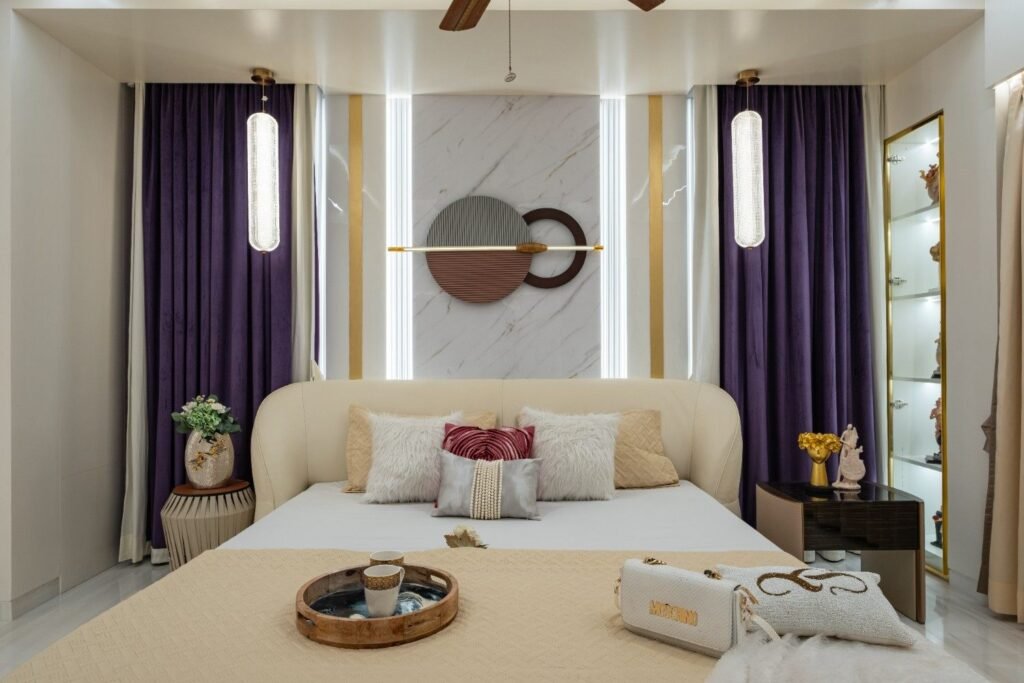
Curtains also matter. Floor-length curtains with the correct track position can make a room feel taller. The fabric should suit the amount of sunlight and the level of privacy required.
Small details such as handles, switches, skirting, lighting temperature and joinery gaps can change how finished the apartment feels.
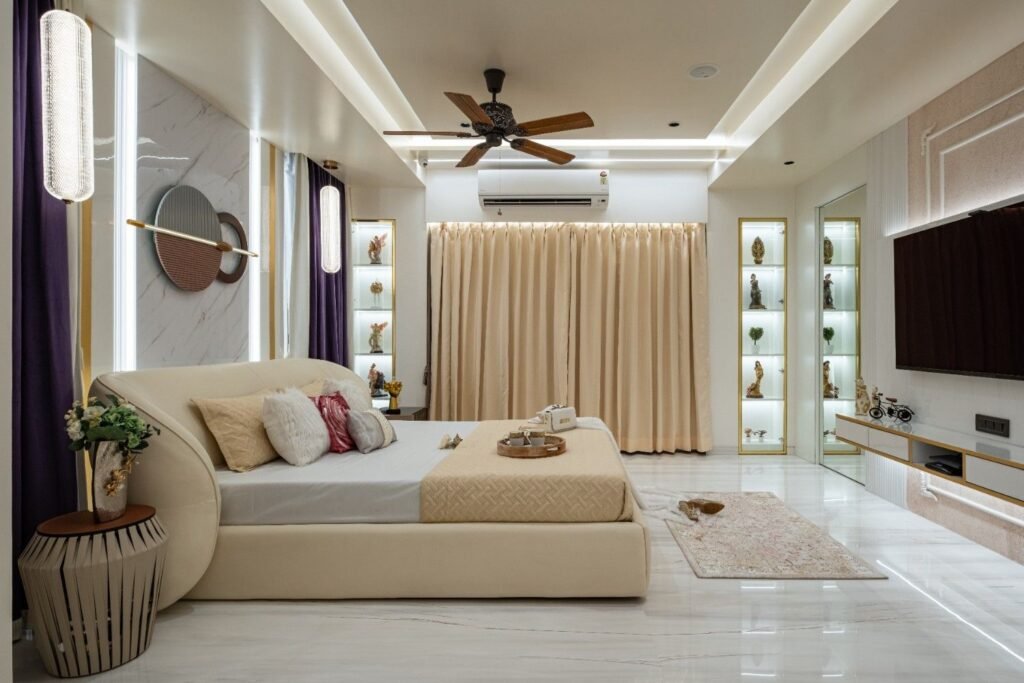
Bedrooms should feel quieter
The bedroom needs a different approach from the living room.
Keep the colour palette calmer. Use bedside lighting instead of relying only on the main ceiling fixture.
A padded headboard can add comfort and visual weight, while full-height wardrobes keep the room cleaner.
If the apartment faces a busy road, window treatment and sound control deserve attention early in the planning stage.
And keep charging points close to the bedside. It’s a tiny detail, but you’ll use it every night.
Smart home features should solve a real problem
Technology makes sense when it removes a daily inconvenience.
Automated curtains can help with large windows. Smart lighting can make it easier to switch between bright task lighting and softer evening lighting.
Sensors can also be useful in selected areas.
But don’t install technology simply because it’s available. Every system needs maintenance, compatible devices and a clear reason for being there.
How much should you spend on a luxury apartment interior?
There isn’t one useful price for every apartment.
The cost depends on the apartment size, number of rooms, kitchen scope, wardrobe requirements, materials, lighting, electrical work, furniture and the level of customisation.
A 2 BHK with standard finishes can have a very different budget from a 4 BHK with custom furniture, premium surfaces and extensive electrical changes.
Before finalising the design, ask for a room-wise scope. It makes the budget easier to understand and reduces surprises later.
For broader planning, you can also explore our page on residential interior designers in Pune.
A practical planning order for your apartment
Don’t choose furniture, colours and décor randomly.
A better sequence is:
- Measure the apartment.
- Decide how each room will be used.
- Plan furniture positions.
- Fix electrical and lighting points.
- Plan kitchen and wardrobe storage.
- Select flooring and major finishes.
- Choose furniture and fabrics.
- Add curtains, artwork and décor.
- Check circulation and storage before final installation.
This order prevents a common problem: buying something beautiful and then discovering that it blocks a door, socket or walking path.
When should you involve an interior designer?
Bring the designer in before civil work and electrical points are finalised.
That’s when decisions about storage, kitchen layout, lighting, wardrobes, false ceilings and furniture can still be changed without creating unnecessary rework.
Xclusive Interiors works with homeowners across Pune and Hyderabad, covering apartment planning from the initial design stage through execution and handover.
For homeowners comparing options, start with our interior designers in Pune page to understand the broader residential design service.
Final thought
Good luxury apartment interiors don’t try to make every room look expensive.
They make the apartment feel right for the people living in it.
The kitchen works when someone cooks. Storage holds what the family actually owns. The living room handles guests without feeling crowded. The bedroom stays comfortable at the end of a long day.
Get those decisions right first. The luxury comes through in the details.