
Types of Modular Kitchen Layouts Explained for Your Home

When homeowners search for the types of modular kitchen layouts, they’re usually struggling with one core issue: their current kitchen doesn’t work for their lifestyle.
Maybe there’s not enough counter space. Maybe storage is inefficient. Or perhaps the movement flow is so bad that cooking feels stressful. In this deeply informative guide, created with insights from top interior designer, we break down every layout, common design pain points, and technical details you must know before finalizing your kitchen.
Table of Contents
What Are Modular Kitchen Layouts?
Modular kitchens are built from standardized sections (modules) that form cabinets, drawers, tall units, and countertops.
The layout is the fundamental design blueprint that determines:
- Countertop length
- Movement flow
- Appliance positioning
- Storage accessibility
- Safety and ventilation
Choosing the right layout ensures your kitchen is not only stylish but highly functional for daily use.
Why Choosing the Right Layout Matters
Most kitchen regrets come from poor planning—not poor materials.
Common challenges include:
- Difficulty accommodating appliances
- Bending too much due to poor storage planning
- No defined work zones
- Wasted corners
- Poor natural lighting
- Inefficient movement flow (breaking the work triangle)
A proper layout prevents all these issues while enhancing long-term comfort, resale appeal, and efficiency.
Types of Modular Kitchen Layouts
Below is an in-depth breakdown of each layout, with technical insights, ideal room sizes, and pain-point solutions.
1. Straight-Line Kitchen Layout
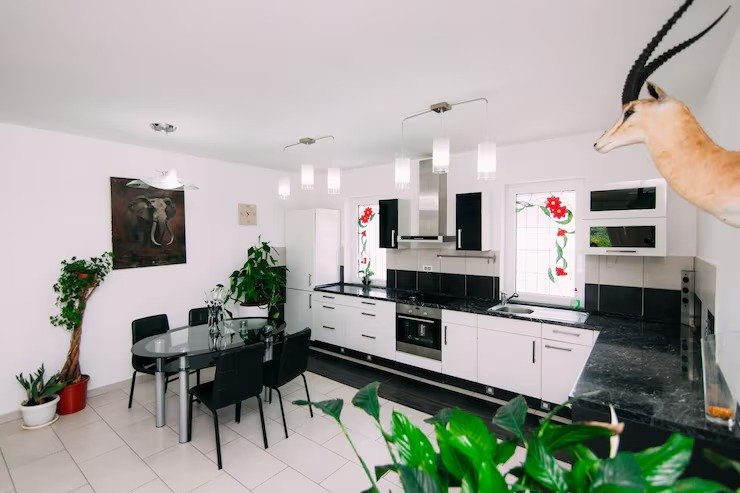
This is the simplest among the types of kitchen layouts, built along a single wall.
Best for:
Small apartments, studio kitchens, rental homes
Pain Points Solved:
- Limited space for cooking
- Tight walkways
- Difficulty fitting major appliances
Technical Notes:
- Minimum wall length: 8–10 ft
- Overhead cabinet depth: 12–15 inches
- Base cabinet depth: 22–24 inches
Why choose it:
Ideal when you want a clutter-free, minimalist setup and quick workflow.
2. L-shaped Kitchen Layout
A widely chosen layout for modern homes.
Best for:
1–2BHK homes, open kitchens, corner spaces
Pain Points Solved:
- Unused corner space
- Insufficient countertop area
- Restrictive food prep zones
Technical Notes:
- Minimum arm length: 4 ft on each side
- Perfect for maintaining the work triangle distance (4–9 ft)
Why choose it:
Provides great efficiency, easy movement, and can accommodate large appliances seamlessly.
3. Parallel / Gallery Kitchen Layout
Considered the most efficient kitchen layout globally.
Best for:
Compact spaces, long rectangular rooms, heavy cooking routines
Pain Points Solved:
- Insufficient countertop
- Improper work zones
- Difficult appliance access
Technical Notes:
- Distance between two counters: 3.5–4.5 ft
- Makes cooking faster with defined zones (cleaning → prepping → cooking)
Why choose it:
Delivers unmatched efficiency and easy workflow segmentation.
4. Island Kitchen Layout
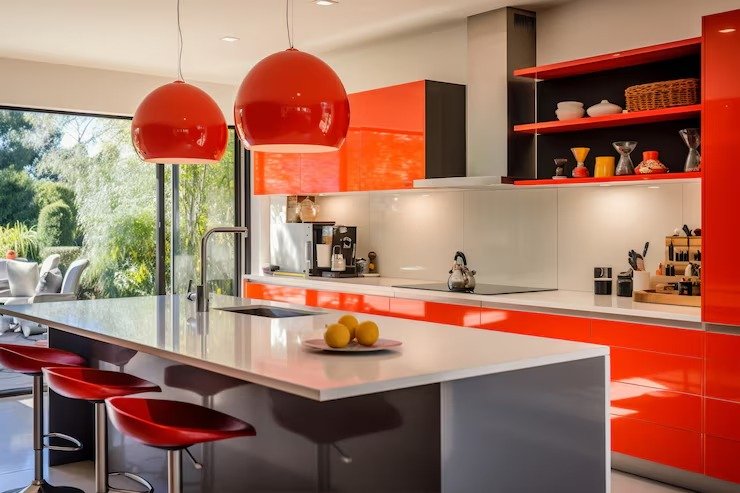
This layout creates a dedicated island counter in the center of the space.
Best for:
Large kitchens, social families, premium homes
Pain Points Solved:
- Lack of breakfast counter
- No space for casual dining
- Insufficient prep area
Technical Notes:
- Minimum room width: 12 ft
- Island size: 3×5 ft minimum
- Clear walk-around space: 42 inches
Why choose it:
Perfect for multitasking, entertaining guests, and enhancing luxury.
Technical Measurements That Matter in a Modular Kitchen
Even the best types of layouts fail if measurements are incorrect.
Ideal kitchen measurements:
- Countertop height: 34–36 inches
- Base cabinet depth: 22–24 inches
- Overhead depth: 12–15 inches
- Tall unit width: 24–36 inches
- Chimney height: 24–30 inches above hob
- Drawers:
- Cutlery: 4–6 inches
- Thali drawer: 8 inches
- Pot & pan: 12–15 inches
Technical Work Triangle Rule:
- Sink → Hob → Refrigerator: 12–26 feet combined
This ensures minimal movement fatigue.
Explore kitchen design ideas here.
Biggest Pain Points in Choosing a Modular Kitchen Layout
Homeowners commonly face:
1. Wrong layout chosen for the room shape
A U-shaped kitchen in a narrow room restricts movement.
2. Poor appliance placement
Refrigerator blocking corners, microwave placed too high, etc.
3. Lack of future-proofing
Ignoring RO space, chimney duct, or tall unit requirements.
4. No planning for electrical points
Leads to cluttered countertop and visible wires.
5. Insufficient storage depth
Shallow cabinets make large utensils unusable.
How to Choose the Right Modular Kitchen Layout for Your Home
Here’s a clear, expert-backed process:
1. Evaluate the Kitchen Shape
- Square → U-shaped
- Rectangular → Parallel
- Open layout → Island or L-shaped
2. Check Family Cooking Style
- Heavy cooking → U-shaped or Parallel
- Light cooking → Straight-line or L-shaped
3. Measure the Working Triangle
Ensure hob, sink, and fridge have smooth flow.
4. Plan Appliances Before Cabinets
It’s easier to build cabinets around built-ins than the opposite.
5. Focus on Ventilation & Natural Light
Especially important in semi-closed kitchens.
6. Factor in Movement Space
Minimum walkway: 3.5 ft
7. Future-Proof the Layout
Plan for dishwasher, chimney ducting, light points, and RO cabinet.
This approach is used by expert designers at Xclusive Interiors, ensuring layout selection is strategic and practical.
Common Modular Kitchen Planning Mistakes to Avoid
- Choosing aesthetics over function
- Ignoring lighting
- Not planning power sockets
- Selecting the wrong corner modules
- Overcrowding with upper cabinets
- Choosing the wrong countertop height
Avoiding these ensures your modular kitchen design stays efficient for years.
Conclusion
Choosing the right among the many types of modular kitchen layouts is not just about style it’s about everyday comfort, function, and safety. When you evaluate your kitchen size, lifestyle, appliance needs, and technical measurements, you naturally arrive at the perfect layout that makes cooking enjoyable and stress-free. And with expert guidance from Xclusive Interiors, you can ensure your kitchen is beautiful, intelligent, and future-ready.