
Reception Area Design Ideas That Make the Right First Impression

Table of Contents :
- Why Reception Area Influence Trust More Than You Think
- Common Mistakes That Ruin Reception Area Design (Seen Repeatedly on Sites)
- Reception Area Design Ideas That Start With Intelligent Space Planning
- Create an Instinctive Movement Flow Visitors should know where to go without asking.
- Design Functional Zones Without Building Walls
- Reception Desk Placement: Visibility Without Intimidation
- Lighting: The Most Misunderstood Element in Reception Area
- Furniture & Materials That Define Brand Perception
- Ergonomics: The Forgotten Side of Reception Area Design
- Align Material Palette With Brand Personality
- Branding in Reception Area: Less Is Stronger
- Reception Area Design Ideas That Improve User Experience
- Technology Integration That Makes Reception Areas Future-Ready
- Extra Reception Area Design Ideas Professionals Always Consider
- Conclusion: The Real Purpose of Reception Area Design
Most businesses lose trust before a single word is spoken—and the reception area is usually the reason. A reception area is not décor. It is brand psychology in built form.
This blog goes beyond Pinterest inspiration to explain what actually works, what fails over time, and what experienced interior professionals consider before designing a reception that leaves a lasting impression.
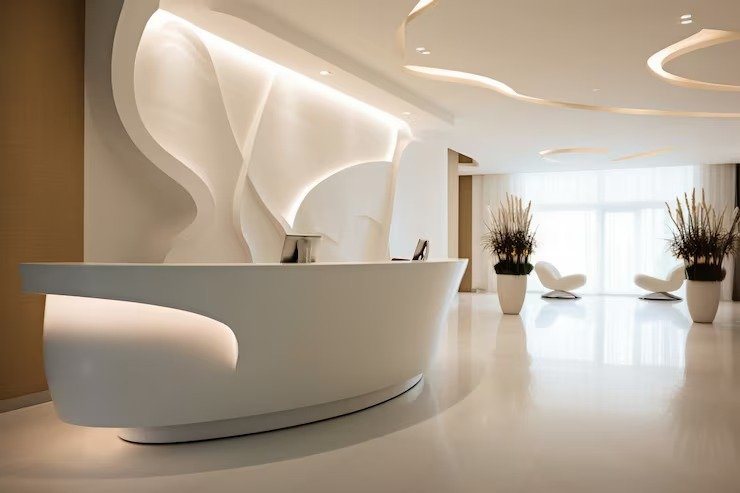
Why Reception Area Influence Trust More Than You Think
Environmental psychology shows that visitors form subconscious judgments within the first 7–10 seconds of entering a workplace. The reception area becomes the lens through which your entire organisation is evaluated.
Here’s the reality most blogs don’t mention:
People don’t judge effort—they judge clarity.
If the reception area feels confusing, cluttered, noisy, or uncomfortable, visitors don’t say it aloud—but trust quietly drops.
Common Mistakes That Ruin Reception Area Design
Before exploring good reception area design ideas, it’s important to understand where most reception spaces fail:
- No clear visual direction on entry
- Reception desk hidden or overpowering
- Visible wiring, exposed routers, messy counters
- Seating placed randomly, not ergonomically
- Poor acoustics causing echo and noise stress
- Branding that screams instead of communicates
- Outdated materials that look tired within a year
Most reception failures are not budget problems—they’re planning problems.
Reception Area Design Ideas That Start With Intelligent Space Planning
Experienced designers treat the reception like a controlled transition zone, not a waiting room.
Create an Instinctive Movement Flow Visitors should know where to go without asking.
Do this:
- Keep walkways at least 3 feet wide
- Ensure the reception desk is visible within 2–3 steps
- Use flooring texture or material changes to indicate direction
Avoid this:
- Furniture blocking the line of entry
- Decorative elements that confuse movement
- Multiple focal points competing for attention
Design Functional Zones Without Building Walls
Great reception area design ideas rely on visual zoning, not heavy partitions.
Typical zones include:
- Reception desk zone
- Visitor waiting lounge
- Branding or company story wall
- Visitor management or check-in area
Expert insight:
Ceiling drops, lighting layers, or vertical slats separate zones softly—keeping the space open while staying organised.
Reception Desk Placement: Visibility Without Intimidation
The desk should feel approachable, not dominant.
Proportions that work in real offices:
- Desk height: ~42 inches
- Counter depth: 18–24 inches
- Visitor clearance: minimum 5 feet
Common mistake:
Oversized reception desks look impressive initially but create distance, intimidation, and awkward interaction over time.
Lighting: The Most Misunderstood Element in Reception Area
Lighting doesn’t just illuminate—it sets an emotional tone.
Layer Lighting, Don’t Flood It
- Ambient lighting for overall visibility
- Accent lighting on logos, textures, or art
- Task lighting for reception staff
Single-source lighting makes even expensive spaces feel flat.
Choose the Right Colour Temperature
Recommended: 3500K–4000K
This avoids both the hospital-blue effect and overly warm yellow tones.
Fix Hidden Lighting Failures
- Desk shadows → add under-counter LEDs
- Dead corners → wall washers
- Harsh glare → diffused panels
These small corrections dramatically improve visual comfort.
Furniture & Materials That Define Brand Perception
Reception furniture silently answers one question:
➡ ️ Does this business care about people or just appearances?
Seating: Comfort Is Non-Negotiable
Use:
- High-density foam
- Performance or stain-resistant fabrics
- Upright seating (avoid deep lounge sofas)
Secret insight:
If visitors constantly shift posture, the seating has failed.
Reception Desk Materials That Age Well
- Quartz for scratch resistance and premium finish
- Laminates for budget durability
- Back-painted glass for minimal, controlled luxury
Avoid ultra-gloss materials in high-touch zones—they show wear quickly.
Ergonomics: The Forgotten Side of Reception Area Design
Reception staff experience the space 8–10 hours daily.
Don’t ignore:
- Correct screen and keyboard height
- Adjustable lighting
A tired receptionist reflects fatigue back onto visitors.
Align Material Palette With Brand Personality
Experienced designers don’t choose materials randomly.
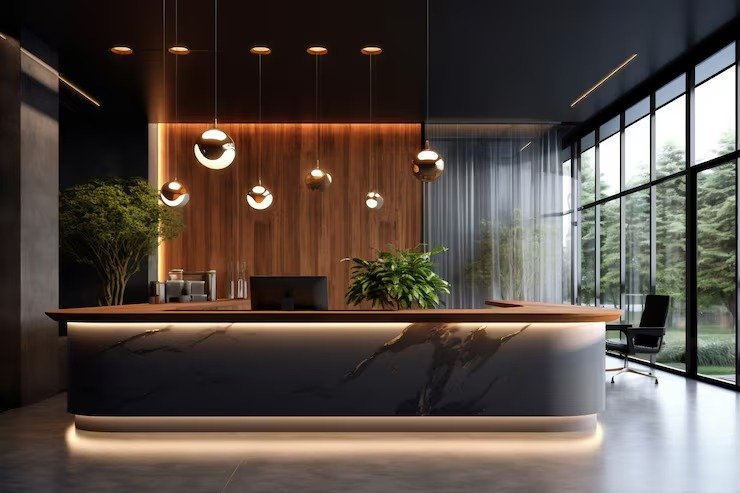
- Wood + neutrals → corporate credibility
- Metal + glass → tech-forward efficiency
- Earthy textures → wellness, hospitality, care-based brands
Do not mix languages.
A confused material palette creates a confused brand signal.
Branding in Reception Area: Less Is Stronger
More logos ≠ more impact.
Highlight the Logo Intentionally
Best practices include:
- Backlit acrylic letters
- 3D metal signage
- Matte finishes over gloss
Use Brand Colours Sparingly
Apply them through:
- Cushions
- Accent walls
- Desk detailing
When branding shouts, trust drops.
Tell a Visual Brand Story
This builds credibility subconsciously.
Options include:
- Digital screen with company journey
- Clean awards or milestones display
- Subtle timeline or philosophy wall
Reception Area Design Ideas That Improve User Experience
User experience determines how waiting feels.
Digital Visitor Management
Replace manual registers with:
- QR check-ins
- App-based systems
- Tablets for forms
This instantly upgrades perception.
Control Noise Before It Becomes a Problem
Use:
- Acoustic ceiling panels
- Fabric-backed walls
- Upholstered seating
Quiet environments communicate professionalism.
Scent, Sound & Sensory Control
- Light fragrance (lavender, clean citrus)
- Soft instrumental music
These cues reduce anxiety without being noticeable.
Accessibility Is a Design Standard, Not an Add-On
- Lowered desk sections
- Ramps and wider pathways
- Clear signage
Inclusive design signals maturity and foresight.
Technology Integration That Makes Reception Areas Future-Ready
Smart reception areas include:
- Digital welcome screens
- Motion-sensor lighting
- Charging points for visitors
- CCTV and access integration
These don’t feel “techy”—they feel efficient.
Extra Reception Area Design Ideas Professionals Always Consider
- Biophilic design for calmer environments
- Indoor plants for air quality and stress relief
- Artwork aligned with brand philosophy
- Curated reading material
These details separate average spaces from refined ones. Explore commercial interior design projects.
Conclusion: The Real Purpose of Reception Area Design
A reception area is not meant to impress—it is meant to reassure.
When designed correctly, it silently communicates order, credibility, and care. When done poorly, it creates friction long before conversation begins.
A professionally planned reception reflects foresight, not decoration. At Xclusive Interiors, we approach reception area design ideas through behaviour, flow, material performance, and long-term usability—not surface aesthetics alone.
Before planning your reception, ask yourself—is your space simply decorated, or is it deliberately designed to build trust from the first step inside?