
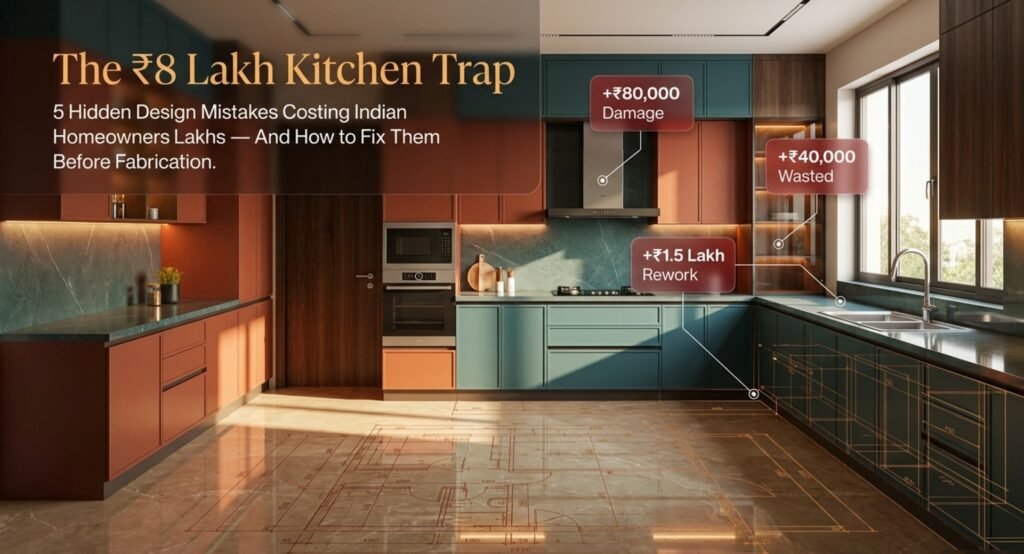
Kitchen design mistakes in India are more expensive than most homeowners realise and they almost always happen before a single cabinet is built.
Think about it this way. You spend months choosing your flat, negotiating the price, and planning your rooms. Then the kitchen the most-used space in your entire home gets designed in a hurry. A contractor visits once, takes rough measurements, and gives you a quote. You say yes.
Three years later, the laminates near the stove are peeling. The storage feels insufficient. Movement in the kitchen is awkward. The chimney struggles to clear smoke. And fixing any of it means tearing out work you already paid for.
This is not bad luck. It is the result of five very specific, very common mistakes all of which are completely avoidable with the right planning.
Whether you are designing a 2BHK, a 3BHK, or a full villa interior, this guide will help you get your kitchen right the first time.
What Are the Most Common Kitchen Design Mistakes in India?
The five most common kitchen design mistakes in India are poor space planning, inadequate ventilation, choosing looks over function, underestimating storage, and skipping technical provisions like electrical points and waterproofing. Each mistake on its own is manageable. Together, they turn a ₹6–8 lakh kitchen into a rework project within three to five years.
The good news is that every single one is preventable if you catch it at the design stage.
Mistake 1: Poor Space Planning
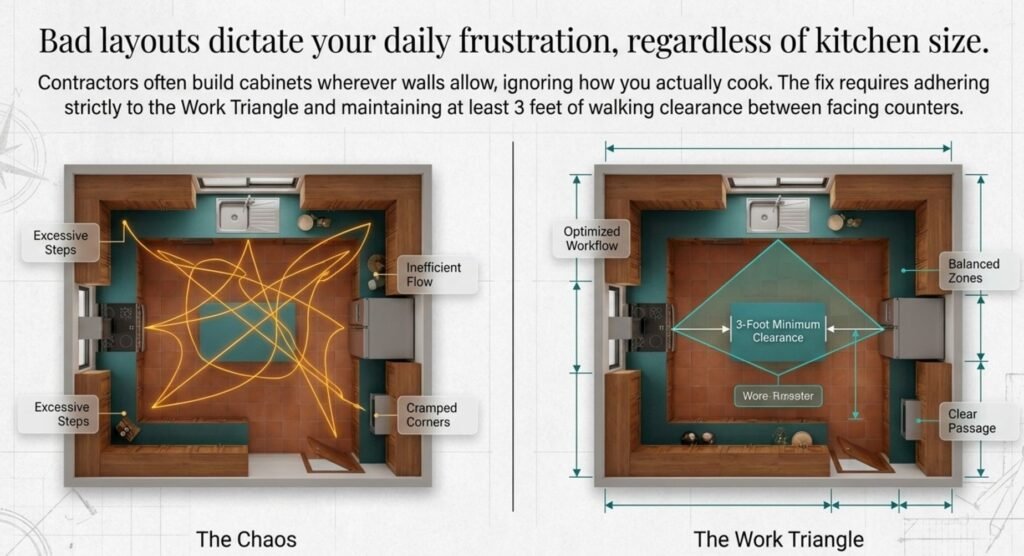
Bad layout is the number one kitchen problem we see across India. And here is what surprises most homeowners it has very little to do with how big or small the kitchen is.
A Real Example From Baner, Pune
One of our clients had a 10×8 ft kitchen in their 3BHK flat. On paper, that is a comfortable size. However, the fridge sat far from the cooking zone. The sink, stove, and refrigerator had no logical flow between them. Dead corners near the walls wasted nearly 25% of the usable space.
The result was a kitchen that felt cramped and tiring to cook in every single day.
After redesigning the layout without touching a single wall the same kitchen felt 40% more spacious and significantly easier to use.
Why This Happens
Most contractors place cabinets and appliances wherever the walls allow. They build what fits, not what works. Nobody thinks about how the homeowner actually moves and cooks.
How to Fix It
- Follow the kitchen work triangle keep the sink, stove, and fridge within easy reach of each other
- Use corner carousel units to eliminate dead corner waste
- For compact kitchens, a parallel or L-shaped layout almost always works best
- Maintain at least 3 feet of walking clearance between two facing counters
💡 In over 60% of kitchen redesigns we have handled across Pune and Hyderabad, the biggest daily frustration was not aesthetics or budget. It was simply poor movement flow.
Mistake 2: Ignoring Ventilation and Heat
Indian cooking is nothing like the light meal preparation that most European or social media kitchen designs are built for. High heat, heavy oil, strong spices, and long cooking sessions create conditions that most beautiful-looking kitchens simply cannot handle.
What Actually Goes Wrong
Many homeowners spend generously on kitchen finishes but choose their chimney based on price. This is one of the most costly decisions they make.
- Chimneys below 1,000 m³/hr suction are completely insufficient for Indian cooking
- Without cross-ventilation, heat gets trapped near the cabinet zone
- This causes laminates to peel and warp within two to three years
- Glossy finishes near the cooking area stain and discolour quickly
A Real Example From Gachibowli, Hyderabad
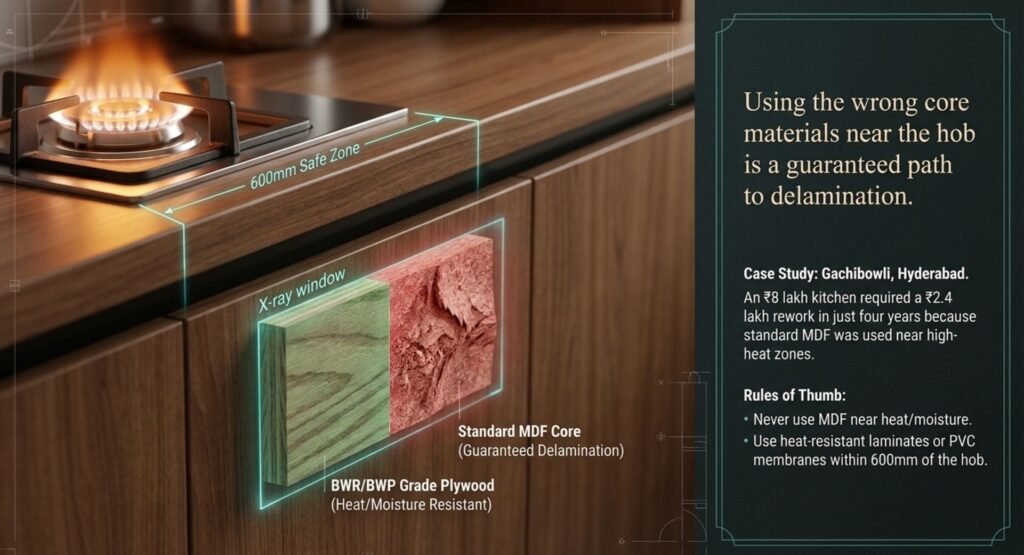
We renovated a four-year-old kitchen in Gachibowli where the entire upper cabinet section near the cooking zone had warped and delaminated. The homeowner originally spent ₹8 lakh on the kitchen. The rework cost ₹2.4 lakh caused entirely by poor ventilation and the wrong materials near the hob. That is money nobody should have to spend twice.
How to Fix It
- Choose a chimney with at least 1,200 m³/hr suction capacity — not the European standard of 600–800
- Add a window or powered exhaust on the wall opposite the cooking zone
- Use heat-resistant laminates or PVC membrane finishes within 600mm of the hob
For cabinet carcases, always use BWR or BWP grade plywood — never MDF near heat or moisture
Mistake 3: Choosing Looks Over How the Kitchen Actually Works
This is where even high-budget kitchens fail. A kitchen that photographs beautifully but does not suit Indian cooking habits becomes a source of frustration within months.
In our experience across thousands of full home projects, the most satisfied clients are always those who designed their kitchen around how they actually live not around what was trending that year.
What Goes Wrong
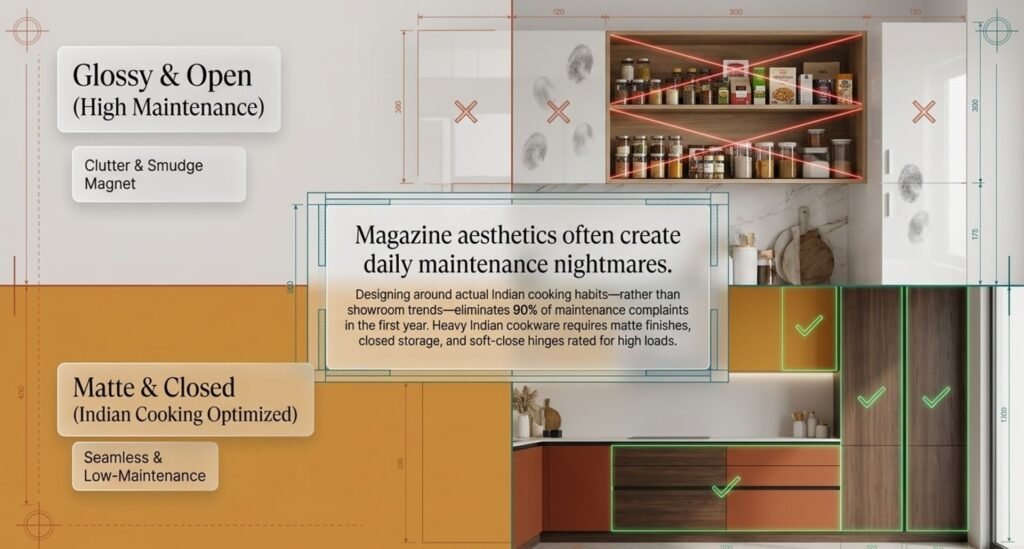
- Glossy acrylic finishes show every fingerprint, oil splash, and water mark immediately
- Open shelves look great in magazines but become clutter magnets in real Indian homes within weeks
- Very light or white colour palettes stain and discolour far faster than expected
- Hardware designed for lighter European cookware struggles under the weight of Indian pots and daily heavy use
How to Fix It
- Use matte or textured laminates — far more practical and significantly easier to maintain
- Prioritise closed storage over open shelves — your kitchen will look cleaner every single day
- Choose soft-close hinges rated for heavier loads — standard practice for Indian kitchens
- Design based on your actual cooking habits, not on what looks good in a showroom
💡 When a client tells us they cook Indian food daily, our first recommendation is always matte finish and closed storage. This single decision eliminates the majority of maintenance complaints in the first year.
Mistake 4: Underestimating How Much Storage You Actually Need
Most homeowners underestimate their kitchen storage requirement by 30 to 40%. This is one of the most consistent patterns we observe across full home interior projects regardless of the budget level.
What Goes Wrong
- No separation between daily-use items, weekly groceries, and occasional appliances
- Overhead cabinets placed too high left completely unused after the first few months
- No deep drawers utensils pile on counters instead
- No dedicated zone for the mixer, OTG, and microwave everything competes for the same surface
A Real Example From Kondapur, Hyderabad
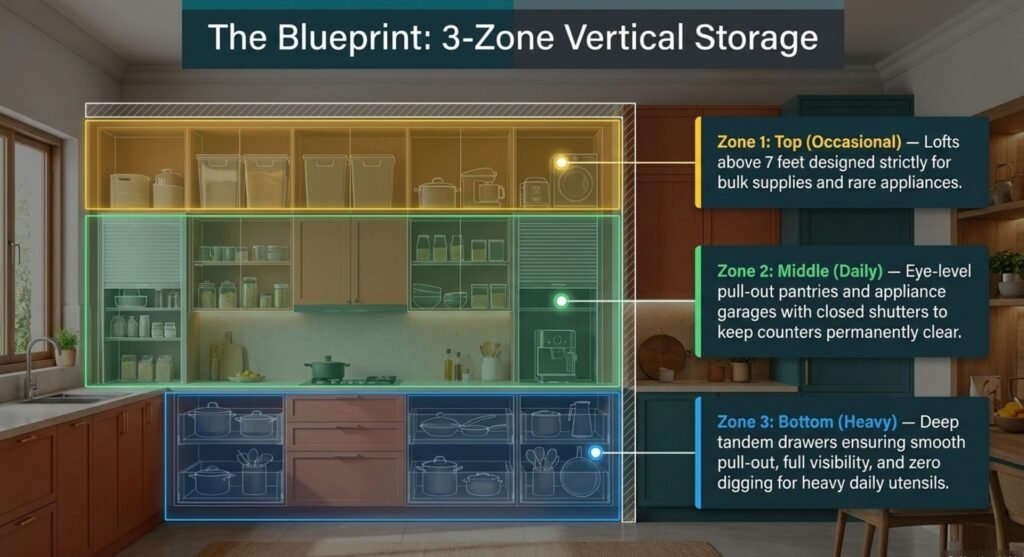
A client in Kondapur had a well-sized kitchen in their 3BHK. However, they struggled with storage despite having what appeared to be enough cabinets. After redesigning the internal organisation using vertical zoning and tandem drawers, the same cabinet count handled 40% more storage. No additional units were added only the internal layout changed.
How to Fix It
Use these specific storage solutions:
- Tandem drawers for daily-use utensils smooth pull-out, full visibility, easy access
- Pull-out pantry units to maximise narrow gaps between appliances
- Loft storage above 7 feet for bulk or occasional items
- An appliance garage with a shutter to keep counters permanently clear
Additionally, plan all storage in three clear zones daily use, weekly use, and occasional use. This simple framework prevents the common problem of “we have cabinets but still no space.”
Mistake 5: Skipping Technical Provisions That Are Expensive to Fix Later
These are the invisible mistakes. They are silent at the time of construction and very costly once discovered because by then, the entire kitchen is already installed and any correction means significant demolition.
What Goes Wrong
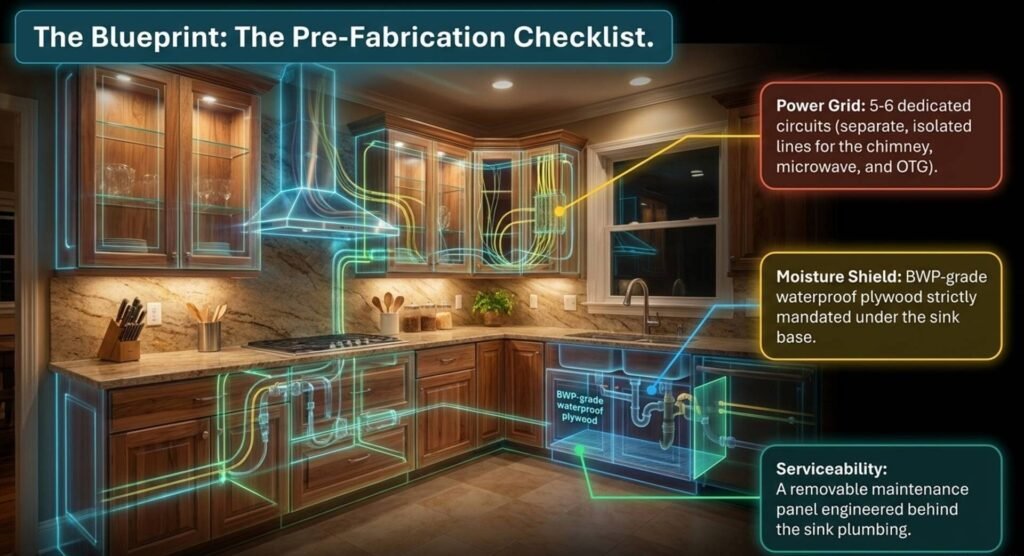
- Only two or three electrical points when a functional Indian kitchen needs at least five or six
- No dedicated circuit for heavy appliances — microwave, OTG, and chimney all sharing the same line
- Plumbing outlet in the wrong position — forcing a cabinet compromise that affects the whole layout
- No waterproofing under the sink cabinet — leading to water damage and warping within two to three years
- No maintenance access panel — any future plumbing repair requires dismantling cabinet work
The Real Cost of Getting This Wrong
Correcting these technical mistakes after installation costs between ₹50,000 and ₹2 lakh depending on scope. In several Pune renovation projects we have handled, clients who originally spent ₹6–8 lakh on their kitchen paid an additional ₹1–1.5 lakh simply to fix errors that should have been addressed before a single piece of joinery was fabricated.
How to Fix It
Before fabrication begins, confirm the following in writing with your designer:
- Minimum five to six electrical points with dedicated circuits for the chimney, microwave, OTG, and refrigerator
- BWP-grade waterproof plywood under the sink cabinet base this is non-negotiable
- A removable access panel behind the under-sink area for future plumbing maintenance
- Plumbing outlet position confirmed jointly by your plumber and interior designer before any joinery work starts
Right vs Wrong: A Simple Kitchen Planning Reference
| Element | Wrong Choice | Right Choice | What It Saves |
|---|---|---|---|
| Cabinet material near moisture | MDF | BWR / BWP plywood | ₹40,000 – ₹1 lakh in rework |
| Finish near cooking zone | Glossy acrylic | Matte or textured laminate | ₹20,000 – ₹60,000 |
| Chimney suction | Below 1,000 m³/hr | Minimum 1,200 m³/hr | Prevents long-term cabinet damage |
| Storage approach | Open shelves only | Tandem drawers and closed cabinets | Daily functionality |
| Electrical points | 2–3 generic points | 5–6 dedicated circuits | ₹50,000 – ₹2 lakh |
| Waterproofing under sink | Skipped | BWP ply with waterproof treatment | ₹30,000 – ₹80,000 |